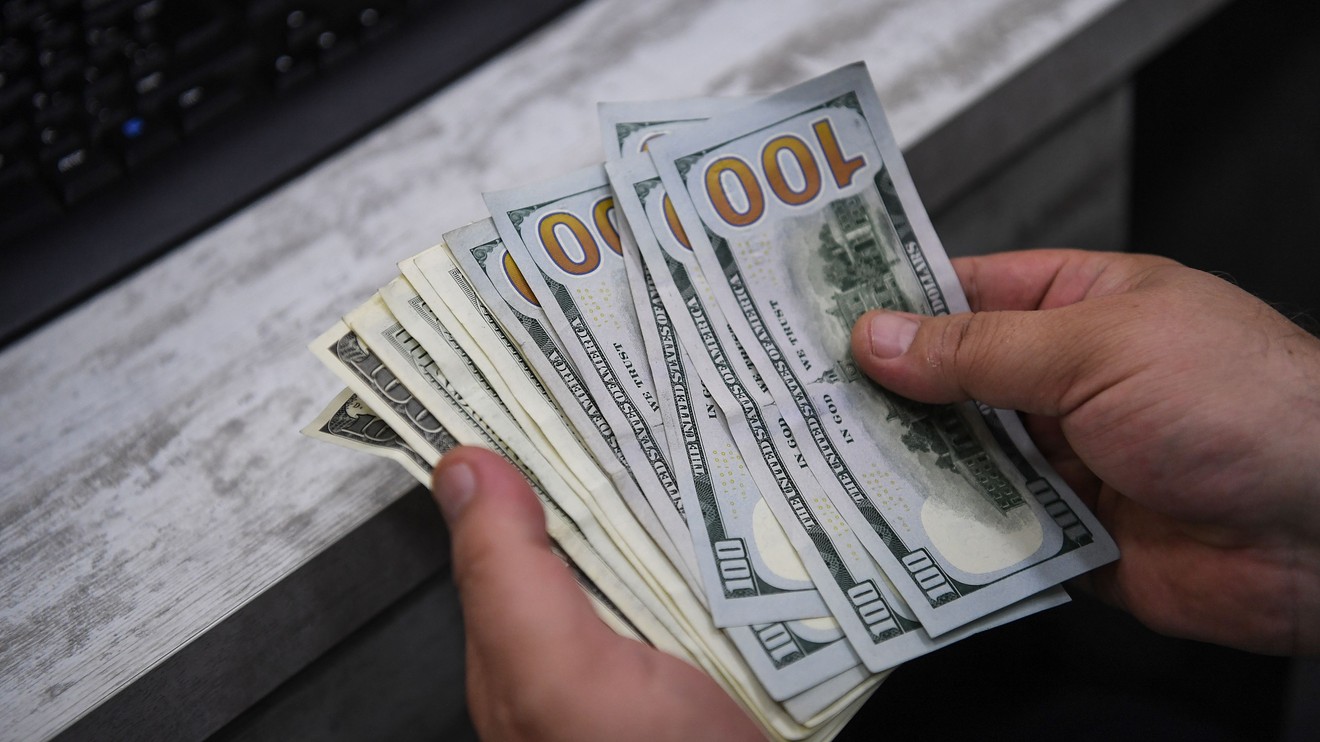
The U.S. dollar was muted despite a better-than-anticipated jobs report for October on Friday, which market participants attributed in part to good news being priced in already.
The U.S. added 250,000 new jobs to its economy in October, dwarfing the estimate from economists polled by MarketWatch of 208,000. Wage growth climbed to a nine-year high of 3.1% on an annualized basis, while unemployment stood unchanged at 3.7%.
The buck, measured by the ICE U.S. Dollar Index DXY, +0.07% pared its losses in response in briefly traded in the green, before slipping back into negative territory. The gauge was last little changed at 96.255, on track for a 0.1% loss on the week, according to FactSet.
“It’s a measure of how inured the greenback has become to good economic news that such a barnstorming headline jobs figure left dollar watchers largely unmoved,” said Jacob Deppe, head of trading at online trading platform Infinox, in emailed comments.
“Not long ago the creation of a quarter of a million new jobs in a month and the confirmation that Americans’ paychecks are rising at their fastest rate for nearly a decade would have sent the dollar into overdrive. These days, not so much. The U.S. economy’s job creation boom is slowly tightening the labor market and forcing up average wages as American employers have to fight harder for every recruit,” Deppe added.
Otherwise, currency markets were driven by upbeat sentiment across financial markets, inspired by President Donald Trump, who said he wants to reach a trade deal with China. Trump is set to meet with China President Xi Jinping at the G-20 summit in Buenos Aires later this month.
Friday’s economic data also showed that the U.S. trade deficit was at a record of $54 billion despite the imposed sanctions on trade partners like China.
Risk sensitive assets, including the antipodean currencies, emerging markets and increasingly also the euro, were all stronger against the dollar, though they gave back some of their earlier gains following the jobs report.
Don’t miss: Dimon warns of sovereign debt crisis risk in Europe: Handelsblatt
The Chinese yuan also notably edged away from the psychologically important level of 7 yuan per dollar early Friday. China’s currency has weakened in the year-to-date as emerging markets assets sold off and the dollar strengthened. However, market participants have been wondering how far the yuan could weaken before Chinese authorities would actively step in to bolster up its managed currency. Breaching the level of 7 yuan per dollar is also expected to lead to a further slide across Asian emerging markets currencies.
The yuan “has seen a monumental squeeze since yesterday morning, above all in the one-year non-deliverable forward, which traded as low as 7.0670 in Asian hours yesterday, and is now at 6.9460,” said Marc Ostwald, global strategist and chief economist at ADM Investor Services International.
One dollar last bought 6.8898 yuan USDCNY, -0.4608% in Beijing, down 0.5%, and 6.8793 USDCNH, -0.4164% in the offshore market, down 0.6%.
The Australian dollar AUDUSD, -0.0278% and New Zealand dollar NZDUSD, +0.0301% fetched $0.7219, up 0.2%, and $0.6662, up 0.1%, respectively.
The Mexican peso USDMXN, -0.9069% which got battered earlier in the week over the decision by incoming President Andrés Manuel López Obrador to cancel an in-progress airport construction project, was among the best performers in emerging markets.
One dollar last bought 19.9544 pesos, down from 20.1568 pesos late Thursday.
Check out: Why emerging markets haven’t really recovered since the summer selloff
The euro EURUSD, +0.0175% also benefited from the turn in sentiment, both because it is the dollar’s main competitor, leaving it to benefit from a weaker buck, but also because it has been increasingly sensitive to risk as investors await further developments in Italy’s budget drama.
Read: Italy is ‘the No. 1 risk factor in the fourth quarter’ for European investments
Also see: Loss of Merkel’s ‘stabilizing force’ could roil European stocks and the euro
The eurozone manufacturing purchasing managers index for October released earlier, was more or less in line with expectations at 52, versus 52.1 forecast. A figure above 50 indicates growth.
One euro last bought $1.1425, compared with $1.1411 late Thursday in New York.
In other news, the U.S. agreed to grant eight countries exemptions to keep buying oil from Iran, according to a Bloomberg report. They include Japan, India and South Korea, and Turkey according to comments from the country’s energy minister.
The Turkish lira USDTRY, -1.3971% rallied to a four-month high versus the dollar in response. One buck last bought 5.4192 lira, up down from 5.5116 lira late Thursday in New York.
Want news about Europe delivered to your inbox? Subscribe to MarketWatch’s free Europe Daily newsletter. Sign up here.