The U.S. dollar was muted at the start of an eventful week, with market participants awaiting the midterm elections on Tuesday and the conclusion of a Federal Reserve policy meeting on Thursday.
On top of that, sanctions against Iran took effect Monday.
The buck, measured by the ICE U.S. Dollar Index DXY, +0.03% was modestly weaker, down 0.1% at 96.418. A stronger-than-anticipated read on the October ISM nonmanufacturing index didn’t manage to lift the gauge out of its tight trading range, in part because it followed an even stronger reading in September when the ISM index hit a 21-year high.
Democrats are expected to narrowly win back control of the House of Representatives in Tuesday’s vote, while the Republicans will likely keep its thin majority in the Senate, if late polls are any indication. But overshadowing these predictions is the fact that many polls got 2016 presidential elections calls wrong. Results are due on Tuesday — election night— though the wait for conclusive results could stretch into the early hours of Wednesday morning or beyond.
Don’t miss: Dollar traders fear midterm-election risk, but here’s the reason the buck remains too enticing to ignore
Read: Stock-market bulls hope midterms revive upside momentum
“A divided Congress will make it more difficult for the U.S. president to pass the legislation he wants and this would be a bearish catalyst for the U.S. currency, especially toward the end of the year,” said Konstantinos Anthis, head of research at ADSS, in a note to clients. “Nevertheless, until we get a clear picture of what the outcome of the elections will be, the greenback should continue on the same positive tone.”
Thursday’s Fed statement will also be closely watched, though the central bank is expected to leave its policy unchanged in favor of a highly anticipated rate hike in December.
Read: Economy sizzles on cusp of 2018 election, but not all lost ground has been reclaimed
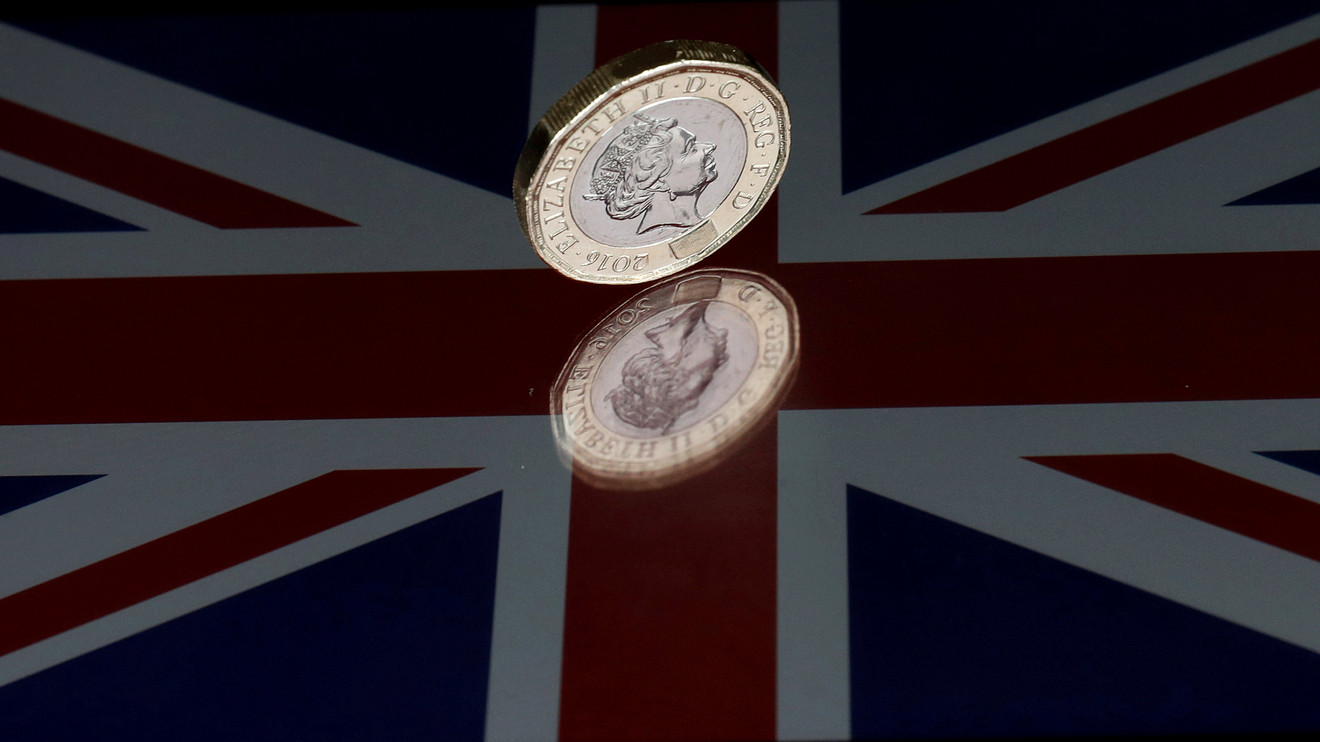
Elsewhere, the British pound GBPUSD, +0.4010% climbed higher on Monday, spurred by a report in The Sunday Times that Prime Minister Theresa May has secured customs deal with the European Union. This deal would avoid a feared hard border between Northern Ireland and the Republic of Ireland. May is also in the process of working out an agreement for a free-trade deal with the European Union, according to the report.
“Any shift in the participants’ attitudes toward greater compromise that would lead to a ‘softer’ Brexit would certainly be positive for the pound,” said Marshall Gittler, chief strategist at ACLS Global.
Sterling jumped to a high of $1.3064 in early Monday trading, before retracing some of its gains when the October services purchasing managers index missed expectations. The index stood at 52.2 last month, versus 53.3 forecast. A reading of more than 50 indicates an expansion in activity.
The pound last bought $1.3015 up from $1.2966 late Friday in New York. Sterling also strengthened against the euro EURGBP, -0.2847% with the shared currency buying £0.8756, down 0.3%.
Against the dollar, the euro EURUSD, +0.0878% traded at $1.1396, down from $1.1388 late Friday in New York.
Providing critical information for the U.S. trading day. Subscribe to MarketWatch’s free Need to Know newsletter. Sign up here.