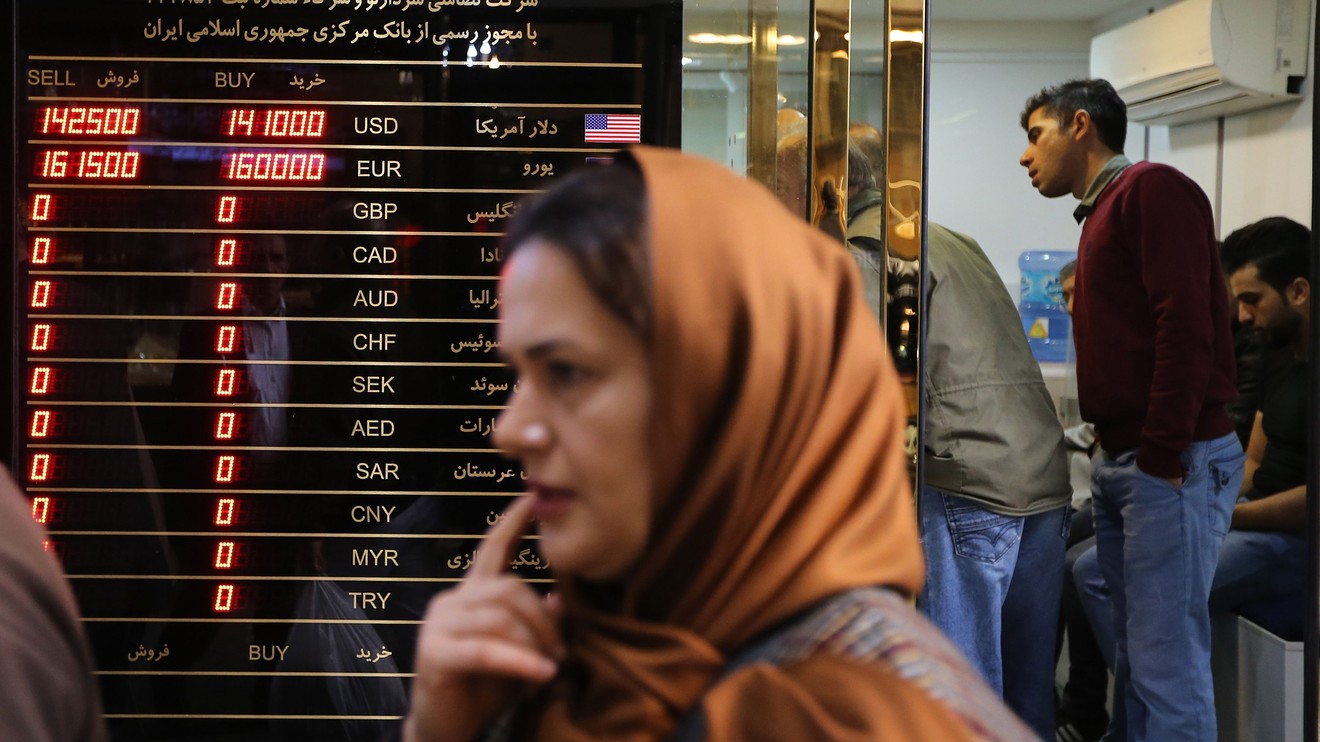
Oil futures pushed higher in choppy trade Monday, erasing earlier weakness in an attempt to bounce back from a sharp October selloff that pushed both the global and U.S. benchmarks into correction territory, as sanctions on Iran take effect but are blunted by the Trump administration’s decision to grant waivers to eight buyers of the country’s crude.
January Brent crude LCOF9, +1.32% the global benchmark, rose 62 cents, or 0.9%, to $73.45 a barrel on the ICE Europe exchange, while West Texas Intermediate for December CLZ8, +1.01% rose 39 cents, or 0.6%, to $63.53 a barrel on the New York Mercantile Exchange.
The renewed sanctions took effect Monday, but late last week announced it granted waivers to eight unnamed countries to allow them to temporarily continue importing Iranian crude. News reports have said the exempted countries include some of the biggest buyers of Iranian crude, including South Korea, Japan, India, China and Turkey.
See: Here’s what U.S. waivers on Iran oil sanctions mean for the global crude market
The U.S. “has done a U-turn as compared with its previous announcements. It thus comes as no surprise that speculators are squaring their net long positions in crude oil, which is likewise weighing on price,” said Eugen Weinberg, head of commodity research at Commerzbank, in a note.
Read: Defiant Iranian president promises to ‘break’ new U.S. sanctions
Weinberg and other analysts noted oil futures had been under pressure in recent weeks well before the waivers were granted, with Brent slumping more than 14% over the past four weeks as both it and WTI, the U.S. benchmark, fell into correction mode, widely defined as a fall of 10% from a recent peak. The weakness reflected growing confidence that increased output by Saudi Arabia and Russia would offset much of Iranian crude lost to the sanctions.
Read: Why oil prices are plunging despite U.S. sanctions on Iran’s energy sector
“The more than 14% correction that Brent has seen since the beginning of last month illustrates how the market has moved from a place where the loss of Iranian crude was providing maximum support, including to the physical crude market, to a point where the most extreme scenarios for constraints on Iranian crude—including those which had been reiterated for the longest time by U.S. authorities—are now being disregarded even as sanctions formally take effect,” wrote analysts at JBC Energy, a Vienna-based consulting firm.
In other energy trading, December natural-gas futures NGZ18, +7.67% was up 7.6% to $3.534 per million British thermal units in heavy volume after hitting a nine-month high at $3.57. Analysts at TFS Energy, in a note, said the surge was fueled by forecasts indicating well-below normal temperatures and elevated heating demand across the much of the country in the coming weeks.
December gasoline RBZ8, +0.33% rose 0.4% to $1.7152 a gallon, while December heating oil HOZ8, +1.51% rose 1.3% to $2.2012 a gallon.
Want news about Asia delivered to your inbox? Subscribe to MarketWatch’s free Asia Daily newsletter. Sign up here.